The context
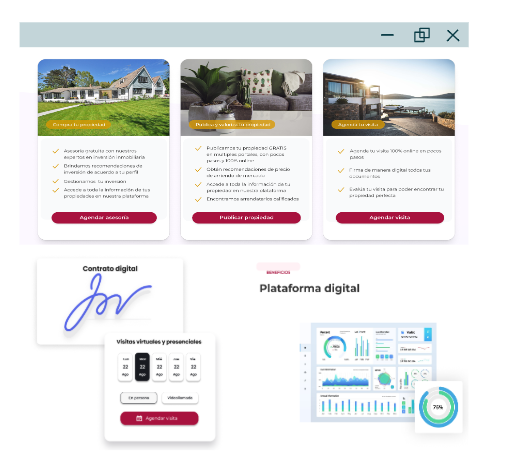
TangoRent by Greystar was operating in Chile's residential rental market — a market notorious for opacity, paper-based processes, and slow transactions. The platform's mission was to fully digitize property management. The problem was that "digitization" in this market mostly meant putting a web form in front of the same manual process. Competitors had slick front-ends with the same human bottlenecks behind them.
My mandate: make the rental journey end-to-end digital. The tenant screening process was the critical blocker.
The problem
What I observed
Tenant evaluation was a multi-day manual process. A prospective tenant had to gather 12+ documents — pay stubs, employment contracts, AFP certificates, pension contributions, tax records, national ID — submit them to the operations team, and wait while an analyst manually reviewed each one. Each review took 4–5 hours per applicant. If anything was missing, the cycle restarted.
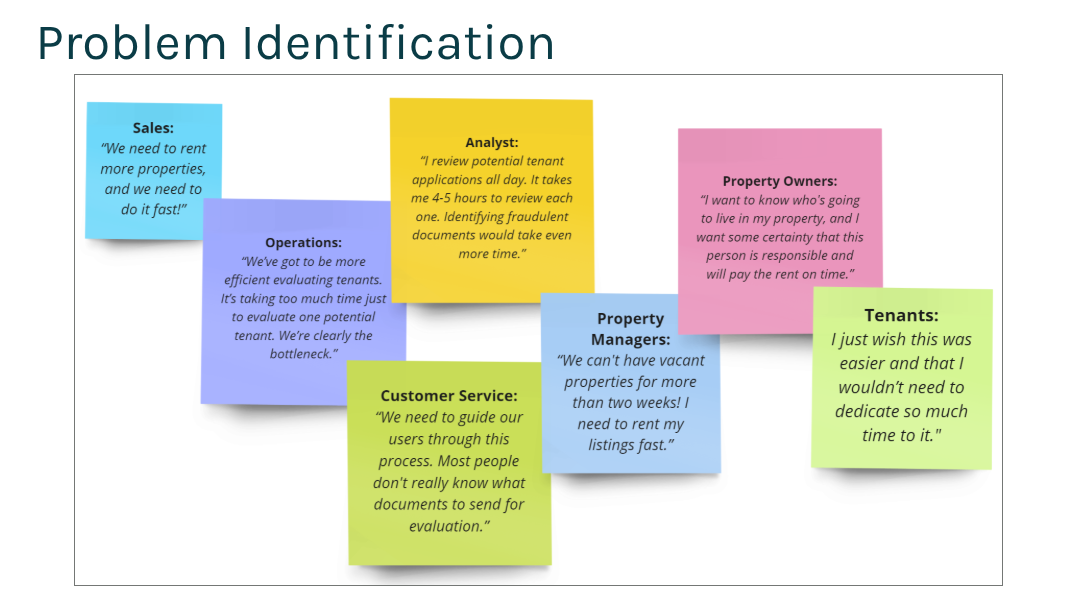
What stakeholders told me
Sales"We need to rent more properties and we need to do it fast."
Operations"We're the bottleneck. It's taking too much time to evaluate one potential tenant."
Analyst"I review applications all day. Each one takes 4–5 hours. And identifying fraudulent documents? That takes even longer."
Property manager"I can't have a vacant unit for more than 2 weeks."
Tenant"I just wish this was easier."
The real problem beneath the stated problem
Everyone described a speed problem. But when I dug into rejected cases, a second problem emerged: fraud. Analysts weren't trained to identify falsified documents — fraudulent pay stubs and contracts were slipping through, creating legal exposure after contracts were signed.
The solution couldn't just be faster. It needed to be faster and structurally fraud-resistant. Optimizing the manual process wasn't enough — the architecture had to change.
Competitive landscape
I analyzed existing market solutions. Finding: they had digitized the form, not the process. Tenants uploaded documents to a portal — then a human manually reviewed them on the other end. Front-end polish, back-end status quo. That gap was the opportunity.
Discovery & opportunity framing
North Star Metric: New Contracts Rate — leases signed per week. This captured both sides: if evaluation was slow, contracts stalled. If tenants abandoned, contracts stalled.
Guardrail metrics: Tenant Evaluation Success Rate (fast and accurate) · Tenant Satisfaction Score · Time to Property Match.
The key insight
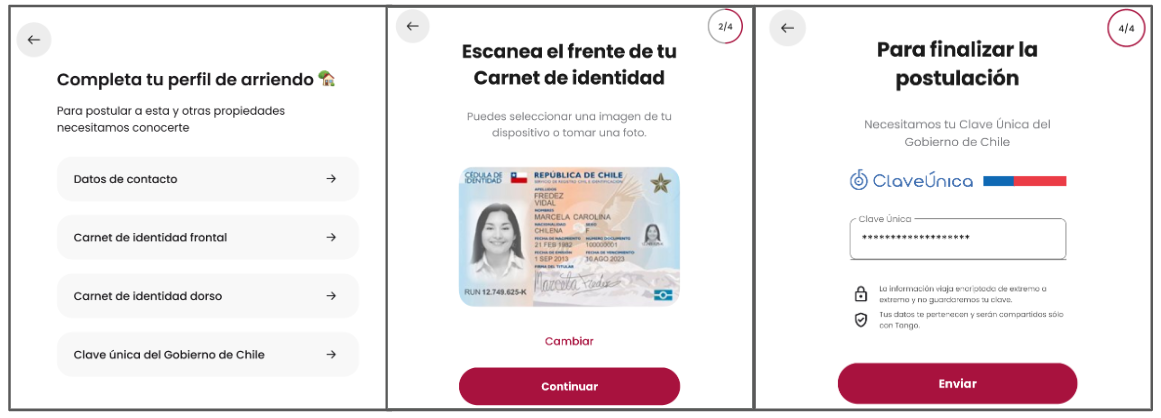
Chile's government offers API access to official data via RUT + Clave Única (national ID + government digital credential). This meant we could retrieve employment records, tax data, AFP contributions, insurance status, and ID verification directly from the source — with tenant consent, in seconds.
Instead of asking tenants to prove their financial standing, we could retrieve it. This single architectural decision eliminated both problems simultaneously: no document friction for tenants, no manual review for analysts, no fraudulent documents — because there were no documents.
Solution design & prioritization
| Solution | Impact | Effort | Decision |
|---|---|---|---|
| Outsource evaluation | High | Low–Med | ❌ Data privacy risk, cost dependency |
| Train analysts to detect fraud | Medium | High | ❌ Doesn't scale, treats symptom not cause |
| Automated ID verification via API | High | Medium | ✅ Selected |
| Automated document verification via API | High | Med–High | ✅ Selected |
| Background / legal check scraping | High | Medium | ✅ Selected — discovered mid-process |
The background check emerged late — from analyzing rejected cases and noticing legal issues being missed entirely. It wasn't in the original brief. It mattered.
What I decided not to do
- Manual document upload as fallback: explicitly removed. An escape hatch would have preserved the old bottleneck for edge cases.
- Outsourced evaluation: rejected on data privacy grounds and cost structure. Owning the data pipeline was a strategic asset.
Build
Team: 1 Product Owner (me) · 1 UX/UI Designer · 1 Data Analyst · 1 Tech Lead · 3 Developers
Methodology: Kanban — the team had worked in Scrum before and found the ceremony overhead counterproductive. I adapted to what served the team.
Timeline: 4 months to MVP
MVP scope
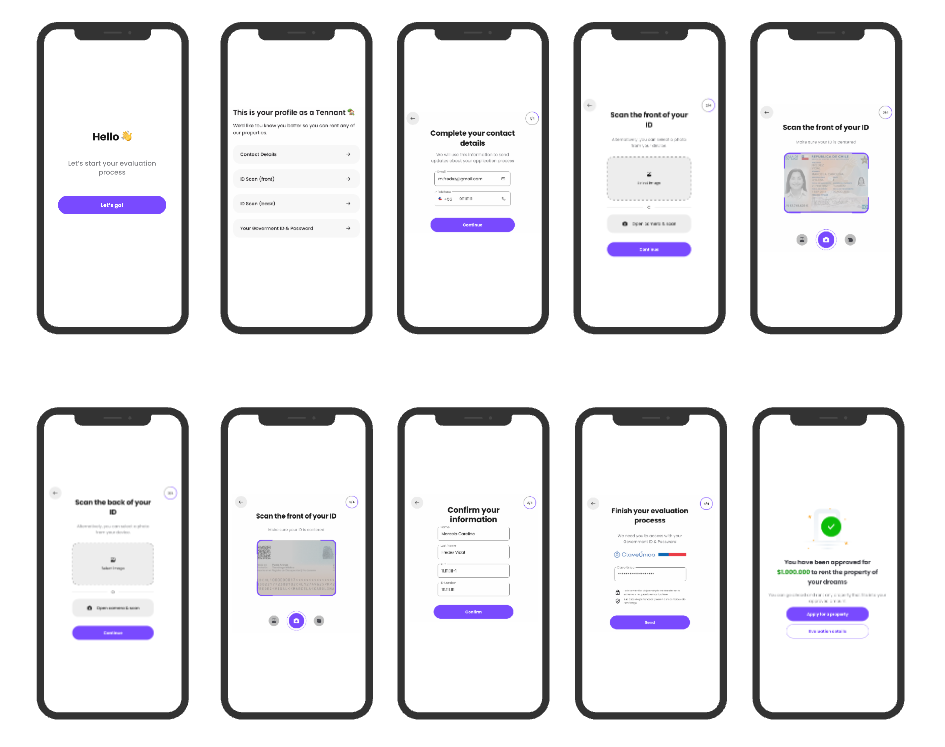
- RUT + Clave Única consent flow
- Government API integration: employment, insurance, tax records, ID verification
- Legal background check via scrapers
- Automated scoring engine with defined business rules
- Tenant-facing result screen · Analyst dashboard for edge cases
Scoring logic
I worked with operations and data teams to define the business rules that translated raw government data into a tenant score. This was product design: deciding which signals matter, how to weight them, and what thresholds trigger which outcomes. The score wasn't a black box — it was an explicit rule set that I owned and documented.
Results
- New contracts per week: 2–4 → 8–10 — the output of the entire rental funnel more than doubled.
- Evaluation time: 5 days → 2 minutes — the bottleneck was eliminated, not optimized.
- Contract signing: 72-hour notary delay eliminated — digital signature replaced the mandatory notary visit.
- Fraud vector: closed — by removing documents from the process entirely, we removed the attack surface.
Reflection
The most important decision wasn't a feature decision — it was choosing to go to the source of truth (government APIs) rather than verify copies of truth (uploaded documents). That reframe changed everything: the UX, the fraud model, the analyst's role, and the business outcome.
The late discovery of the background check risk also matters. I found it by doing the work — reviewing rejected cases, not just running interviews. Discovery doesn't end when you start building.
What I'd do differently: earlier and more explicit communication with tenants about the Clave Única trust question. We underestimated how unfamiliar users were with government API consent flows and had to address that friction in v2.